


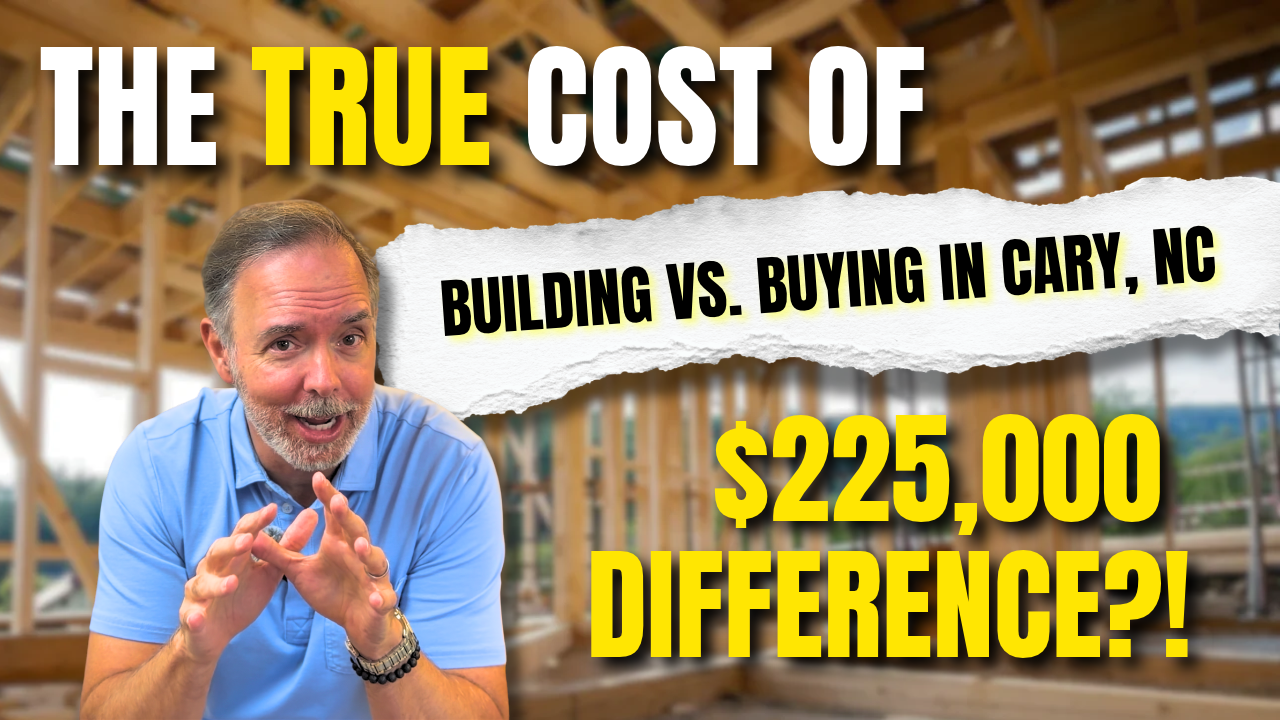
Two 3,000-square-foot homes in Cary can look comparable on paper and have very different price tags. An existing home might need a roof or an HVAC replacement in the next few years. A new build might need a lot premium, design upgrades, and several months of temporary housing before you move in.
In the example below, a $200,000 gap in the upfront price grows to $225,000 after accounting for selected expenses over five years. Your numbers will depend on the property and the builder. The best place to start is with two homes you’d actually consider and a list of what each would cost to move into and maintain.
What does it really cost to build in Cary?
Start by finding out what the builder’s price includes. If you’re buying in a West Cary community such as Amberly, ask for the price of the specific homesite, floor plan, and options you want. If you’re buying land for a custom build, get separate estimates for the lot, site preparation, and construction. Two lots with similar asking prices can cost very different amounts to build on.
Here are four expenses to account for before you commit.
- Site preparation and permits. Clearing, grading, drainage, and utility connections can change your budget before construction starts. Ask which items the builder has priced and which are still allowances. If you’re considering an infill lot near Downtown Cary, include any demolition or utility work the property requires.
- Structural options and finishes. A covered porch, taller ceilings, upgraded cabinets, and flooring can move the price well above the advertised base. Ask for an itemized estimate with your preferred structural options and finishes before comparing it with a resale home.
- Move-in expenses. Check what’s included for window coverings, appliances, fencing, irrigation, and landscaping. Walk through the model home with the standard-features list in hand so you can see which features carry an additional charge.
- Housing during construction. Count rent, storage, and any applicable construction-loan interest or overlapping housing payments. If you’re budgeting $3,000 per month for temporary housing, ten months of rent alone comes to $30,000.
What should you budget when buying an existing home?
An existing home in Preston, Lochmere, or Cary Park may already have the mature trees, established landscaping, or outdoor space you want. It may also put you closer to the places you go most often, whether that’s Downtown Cary or Research Triangle Park. Compare the actual lot and the drive you’d make on a typical weekday.
Inside the home, focus first on the roof, HVAC, windows, and plumbing. Ask about the age and service history of major systems and use your inspection findings to decide what needs attention soon. Then price the improvements you’d choose to make, such as a kitchen remodel or a primary bathroom update. A home that needs paint and fixtures will give you a very different budget from one that needs a new roof and two HVAC systems.
A five-year cost comparison for two Cary homes
This illustration compares two 3,000-square-foot homes. The figures are sample budgets, and the maintenance amounts represent money set aside for possible work.
Expense | Buying an existing home | Building a new home |
|---|---|---|
Purchase price or build total | $720,000 | $920,000 including lot, construction, and upgrades |
Move-in expenses | $5,000 for minor updates | $30,000 for window coverings, fencing, and yard work |
Five-year maintenance reserve | $35,000 | $5,000 |
Temporary housing and construction interest | $0 assumed | $30,000 |
Total modeled budget | $760,000 | $985,000 |
In this scenario, building adds $225,000, or about 30%, to the modeled budget. The difference could narrow if the resale home needs extensive renovations or widen if the build requires more site work or takes longer than planned.
For your own comparison, add closing costs, mortgage interest, property taxes, insurance, HOA dues, and utilities. If you expect to sell within five years, consider potential resale value and selling costs as well. Your personal selections can make a home more enjoyable to live in, and recent comparable sales can help you assess what future buyers might pay for those features.
Which option fits your move?
Building may make sense if a main-floor primary suite, a particular layout, or specific energy-efficiency features are hard to find in the resale homes you’re touring. It helps to have flexibility around your move date and room in your budget for changes. Review the builder’s warranty so you know what it covers and for how long.
Buying an existing home may make sense if you’ve found a neighborhood that fits your commute, a lot with the outdoor space you want, and a home you can comfortably live in while making updates. If your move date is firm, compare the resale closing timeline with the builder’s estimated completion date.
Planning a move to Cary?
If you’re weighing a new build in West Cary against an existing home across town, we can help you compare the builder’s estimate with the resale home’s condition, likely updates, and location. Connect with RJ Hoggard and The Hoggard Group to schedule a one-on-one strategy call.
Check out this article next